Most financial advice skips straight to the tactics: build a budget, open a savings account, and invest early. And while those things matter, they miss a fundamental truth that separates people who transform their finances from those who stay stuck—no matter how hard they try.
The real barrier to financial stability isn’t a lack of information. It’s the mental and emotional state you’re operating from.
If your nervous system is constantly in survival mode, your brain is physically incapable of making the calm, forward-thinking decisions required to build wealth. This article breaks down why that happens—and the first steps you can take to reset.
Table of Contents
What Survival Mode Actually Does to Your Financial Decisions
Survival mode is not just a feeling. It is a neurological state where your brain prioritizes immediate safety over long-term planning. When you’re in it, every financial decision is filtered through the lens of “get through today”—not “build a better tomorrow.”
This shows up in your money life in ways that can look like bad habits but are actually survival responses:
- Impulsive spending—buying to escape, relieve stress, or feel a brief moment of control
- Avoidance—not checking your bank balance, ignoring bills, delaying difficult financial conversations
- Short-term thinking—choosing what feels good now at the expense of what’s good long-term
- Panic decisions—borrowing under pressure, saying yes to financial commitments you can’t afford
Over time, these patterns don’t just affect your bank account—they reshape your identity. You start telling yourself, “I’m not good with money,” “I’m always behind,” and “I’ll never get ahead.”
But here’s the truth: it’s not you—it’s the state you’re operating from.

Hold Onto Your Culture
When you move to a new country, it’s tempting to adopt everything around you – the food, the slang, the routines. You want to fit in, blend in, maybe even disappear a little so the transition feels easier. But your culture isn’t just something you carry – it’s part of who you are. And letting go of it can feel like losing pieces of yourself one by one.
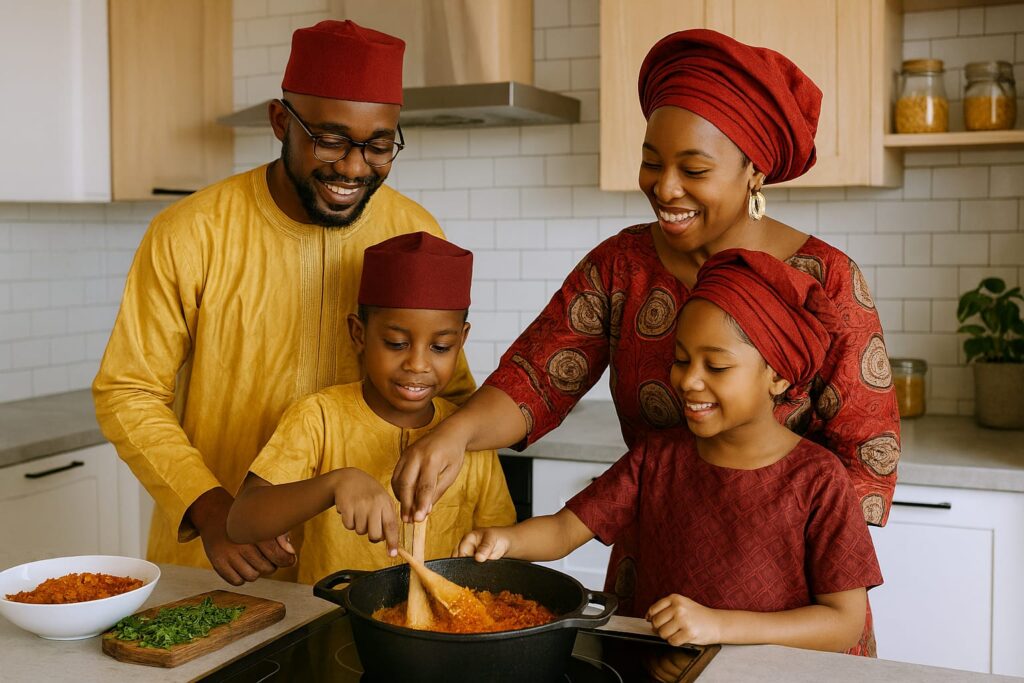
When we first arrived in the UK, we came prepared – bags packed with local foodstuffs, spices wrapped like treasure, and the hope that we could recreate a taste of home. But reality hit quickly. The area we lived in was mostly occupied by natives, and the supermarkets didn’t carry the ingredients we were used to. I remember standing in the aisles, trying to match unfamiliar labels to the flavours I grew up with. It felt like trying to cook a beloved dish with missing pieces.
Eventually, we found our way – African stores tucked in nearby towns, online shops that delivered palm oil and crayfish, and kind strangers who pointed us in the right direction. We adapted, but we didn’t forget.
Then came the routines. Back home, school started at 7:30 a.m. Here, it was 8:45 a.m. – a blessing and a confusion. We also learned that children under four weren’t entitled to full-time education, just 15 hours a week. That meant juggling childcare, adjusting expectations, and learning to navigate a system that felt both generous and unfamiliar.
And don’t get me started on the buses. In Nigeria, you show up at the bus stop and wait – simple. In the UK, you follow a timetable like your life depends on it. Miss it, and you’re stranded. I’ve chased buses, missed buses, and stood in the cold, wondering how something so routine could feel so complicated.
Even at home, the shift was real. Our kids started responding in English more than their native language, picking up phrases from school and friends. We tried to speak our language at home, but it felt like swimming against the tide. Still, we kept trying – because culture isn’t just taught, it’s lived.
So here’s my advice: keep making your native dishes, even if you have to hunt down the ingredients. Speak your language at home, even if your kids answer in English. Celebrate your traditional holidays, even if no one around you knows what they mean. These small acts are powerful – they keep you grounded, give your children a sense of identity, and offer something beautiful to share with new friends.
Because holding onto your culture isn’t about resisting change – it’s about remembering who you are, even as you grow into someone new.
Culture makes people understand each other better. And if they understand each other better in their soul, it is easier to overcome the economic and political barriers.
Paul Coelho
Make New Friends Without Pressure
Friendship in a new country takes time – and patience. I remember how hard it was to talk to people in the beginning. Everything felt unfamiliar: the accent, the humour, even the way conversations flowed. Relating to the natives was overwhelming at times. I’d smile, try to start a chat, and sometimes get ignored before I could finish my sentence. Other times, someone would seem friendly, only to pull away later without explanation. It messes with your self-esteem if you’re not careful.
But here’s what I learned: not every interaction will lead to a connection, and that’s okay. A handful of people will want to stick around – and those are the ones worth holding onto.
I had to define what I wanted in friendships. I stopped chasing approval and started looking for people who shared my values – kindness, honesty, depth. I felt truly isolated until I began building genuine friendships. The kind where you can talk freely, laugh loudly, and be yourself without shrinking.
I still remember the first friend I made here. Oh, it felt heavenly. We’d talk for hours over the phone, and I never once felt the urge to end the call. It was like breathing fresh air after being underwater for too long.
My struggle was different because I stayed here for a whole year before securing a job – not because I didn’t want to work, but because I couldn’t fit into what employers were looking for at the time. Depression crept in quietly, like an unwanted guest. But my family and the few genuine friends I had built became my lifeline. They reminded me that I wasn’t alone, and that healing often begins with connection.
So here’s my advice: start small. Chat with colleagues or classmates. Attend free local events. Volunteer for something that interests you. You don’t need a crowd – you just need a few good people who see you, hear you, and choose to stay.
Because in a new land, friendship isn’t about fitting in – it’s about finding the ones who make you feel at home, even when everything else feels foreign.
Let Yourself Grow in the Process
When I moved, I thought the hardest part would be learning the systems – how to register for school, how to catch the right bus, how to speak so people understood me. But the real challenge was internal. I had to learn how to be patient with myself, how to sit with uncertainty, and how to grow in ways I never expected.
There was a time I felt stuck. A whole year passed before I secured a job – not because I wasn’t trying, but because I didn’t fit the mold employers were looking for. I questioned everything: my skills, my worth, even my decision to move. But in that quiet season, something shifted. I started writing more, connecting with others, and rediscovering parts of myself I’d forgotten. I wasn’t just surviving – I was growing.
Growth doesn’t always look like success. Sometimes it looks like crying in the kitchen, then laughing five minutes later. Sometimes it’s learning to ask for help, or finally saying “no” without guilt. It’s in the small wins, the quiet strength, the way you keep showing up even when it’s hard.
So let yourself grow. Be gentle with your mistakes. Celebrate your progress. You’re not just adjusting to a new country – you’re becoming someone new, someone deeper, someone braver.
Because growth isn’t just what happens to you – it’s what you choose to become, one day at a time.
Be Patient With Yourself
Adjusting to a new country isn’t a sprint – it’s more like learning to dance to a rhythm you’ve never heard before. You’ll miss steps. You’ll trip over your own feet. And sometimes, you’ll just stand still, wondering if you’re even moving in the right direction.
I’ve had those moments – days when I felt like I wasn’t doing enough, learning fast enough, or fitting in well enough. I compared myself to others who seemed to have it all figured out. I forgot that everyone’s journey is different, and that growth doesn’t follow a straight line.
There were times I felt guilty for not being productive, for feeling sad, for needing rest. But slowly, I learned that patience isn’t weakness – it’s wisdom. It’s the quiet strength that says, “I’m doing my best, and that’s enough for today.”
So if you’re feeling behind, overwhelmed, or unsure, take a breath. You’re allowed to take your time. You’re allowed to feel all the feelings. You’re allowed to rest, reflect, and restart as many times as you need.
Celebrate the small wins – like finding the right bus stop, cooking a familiar meal, or making it through a tough day with a smile. These moments matter. They’re proof that you’re growing, even when it doesn’t feel like it.
Because patience isn’t just about waiting – it’s about trusting that you’re becoming everything you’re meant to be, one gentle step at a time.
Price Review
Enter your description-
List Item #1
-
List Item #2
-
List Item #3
Answers To Some Questions
Belonging starts with connections. Join local groups, cultural associations, or online communities where people share your background or interests. Don’t wait for friendships to happen – reach out, attend events, and be open to new relationships. It takes time, but the right people will find you when you show up as yourself.
Absolutely. Your culture is your anchor – it keeps you grounded while you explore new surroundings. Adaptation doesn’t mean erasure; it means blending the old with the new in a way that honours who you are
Because friendship is built on trust, and trust takes time. Cultural differences, language barriers, and unfamiliar social norms can make the connection feel awkward at first. Be patient. Start small – chat with classmates, colleagues, or neighbours. The right friendships will grow naturally when you stay true to yourself.
Then it’s time to give yourself grace. Everyone adjusts at their own pace. Some days will feel like progress, others like setbacks. That’s normal. Be kind to yourself, celebrate small wins, and remember: growth isn’t always visible, but it’s always happening.
Yes, it is real—Click this link to try this product
Final Thoughts
Moving to a new country is more than a change of address – it’s a journey of rediscovery. It’s learning how to belong without losing yourself, how to adapt without erasing your roots, and how to grow through every challenge. From finding your community to holding onto your culture, from building friendships to being patient with your own pace, every step matters.
This journey isn’t always easy. It comes with moments of doubt, loneliness, and quiet victories. But with intention, connection, and a little grace, you’ll find that you’re not just adjusting – you’re becoming. Becoming stronger, wiser, and more beautifully layered than ever before.
So wherever you are in your journey, remember: you are allowed to take your time, hold onto your truth, and bloom in your way. You’re not just surviving – you’re thriving, one brave step at a time.
Check Out This Awesome Deal
This is the heading
You May Also Like These
- Finding Yourself in Foreign Soil: How to Adjust to a New Country Without Losing Who You Are – Copy
- Too Old to Dream? Think again – Here’s why You’re Right on Time
- Finding Yourself in Foreign Soil: How to Adjust to a New Country Without Losing Who You Are
- How to Plan a Family Vacation Without Losing Your Sanity (or Your Wallet)
- Creamy Baked Feta Pasta Recipe